
Jeanne Newby
When Webb City was first incorporated as a city in 1876, the most common mode of transportation was wagons pulled by horses or horse-drawn carriages. Men often rode by horseback, and many miners traveled by mule, as they were cheaper to come by.
As homes were built, it was necessary to build barns, sheds or carriage houses to keep the horses or mules. Most homes of modest income just had a small shed out back with a stall for the horse and a cover for the carriage. Wagons were a cheaper mode of transportation and carriages were a sign of distinction. Surreys allowed more family members to ride together.
The streets were a constant concern to the city, as the horses would leave droppings along the way. A street department, led by the street commissioner, was in charge of keeping the main streets clean. It was frustrating to the city employees when men would leave their horses or mules tied up outside of the bars most of the day. There was talk of limiting the men to the amount of time they were allowed to tie their horses to the same post. (They needed parking meters even back then!) When the streets were paved with brick, it made cleanup a little easier than it had been on the dirt roads.
Meanwhile, back at home, the horses were kept in the carriage house located not too far behind the main house. Several of the large homes in Webb City had such a carriage house. The E.T. Webb home at Liberty Street and Broadway had a large and rather impressive carriage house just west of the main home. It was torn down at a later date to allow room to build the Methodist Church. Many years later, when they were resurfacing the parking lot, many items were uncovered that were probably from the old carriage house.
The Andrew McCorkle home, at 106 S. Webb St., had a carriage house directly west of the house, in approximately the same location as the new kitchen that has been built on the back of the original house. The carriage house extended to the south. Many carriage houses were torn down as the automobile came into use. It didn’t take as much room to house the automobile as it did to house the carriage and horses. Many homes built garages in the early 1900s. Today’s residents of those homes can tell you that the new SUVs and large trucks can’t begin to fit into those rather small garages.
The Hatten home on South Ball Street has an unusually large garage built to the southwest of the house. Mr. Hatten did have horses on his farm (as he liked to refer to his home). But he also was the first citizen of Webb City to obtain a red automobile, and he had a great place to keep his car out of the weather.
The home on the southwest corner of Ball and Daugherty streets has a unique carriage house that opens on both ends to allow driving through.
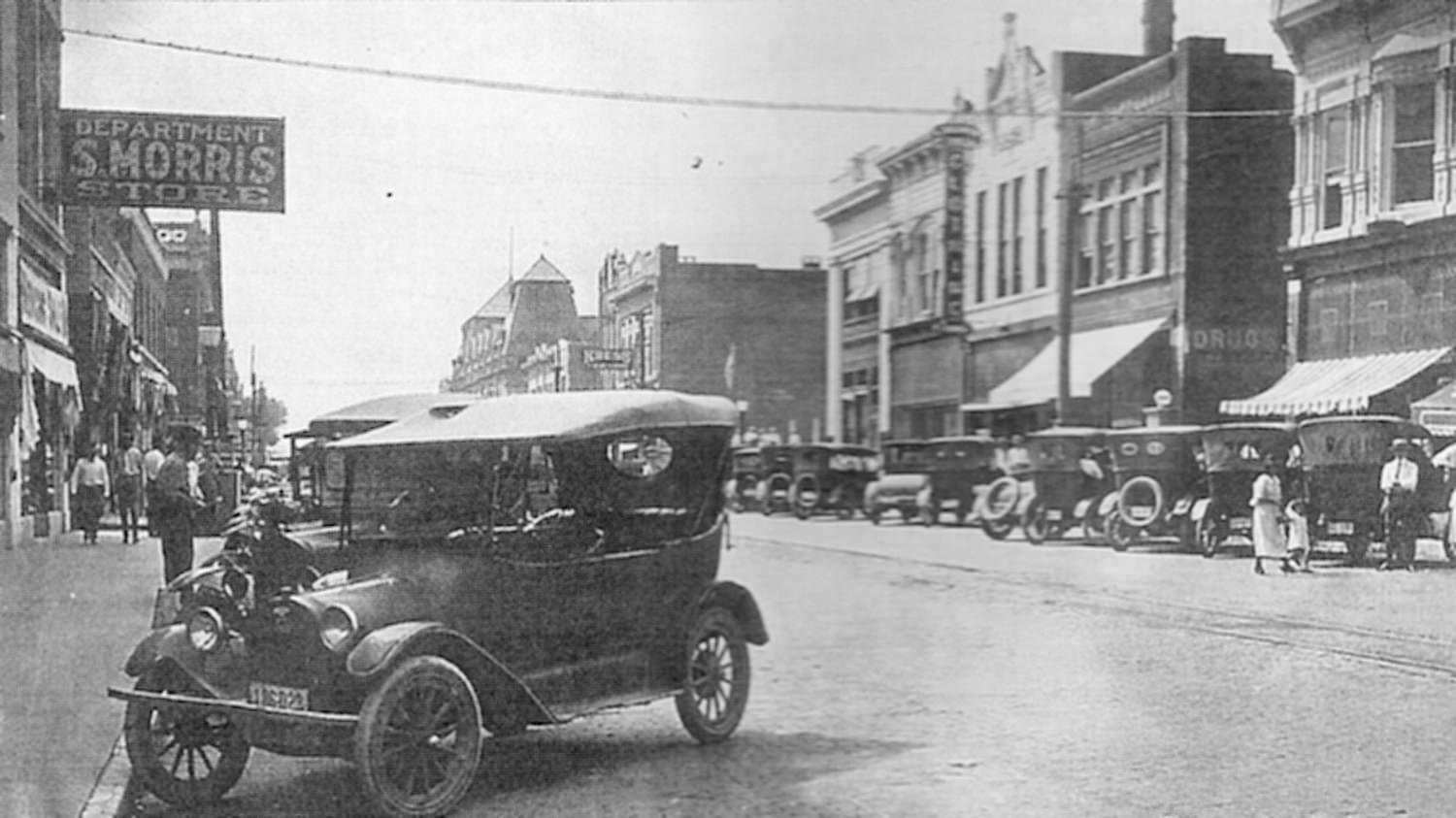
The addition of automobiles to the local streets started out rather slow at first, but by 1919, the streets were bustling with cars lining both sides of Allen (Main) Street. This was the reason Hatten special ordered the first red car, so he could find that car when he was parked among other cars at city functions. There are drawbacks to that idea: everyone can recognize you as the car that may have pulled out in front of them or cut them off too soon. Laura Willard recalled many childhood memories of Hatten’s driving ability.
Some of the homes had outside kitchens so the main home would not be heated up while dinner was being cooked. Some kitchens were located in the basement of the home. This kept the heat away from the dining area and also kept the clutter out of sight. It would be a lot cooler to cook in the basement, since those were the days before air conditioning.
The problem with carriage houses, outside kitchens and sheds is that citizens were taxed for the outbuildings. And as indoor plumbing was added, they were also taxed for each of their water closets.
Carriage houses and outdoor kitchens are mostly memories of the past. Those who are fortunate enough to still have the existing carriage houses have a wealth of history. Cars replaced the carriages, and now the new cars are so big they are requiring the old garages to be replaced.



We use cookies to improve your experience on our site. By using our site, you consent to cookies.
Manage your cookie preferences below:
Essential cookies enable basic functions and are necessary for the proper function of the website.
Statistics cookies collect information anonymously. This information helps us understand how visitors use our website.
Google Analytics is a powerful tool that tracks and analyzes website traffic for informed marketing decisions.
Service URL: policies.google.com (opens in a new window)