From the 3rd floor
of the Webb City Public Library
Webb City Area Genealogical Society
by Alan Hughes
I was born in 1939 in Glendale, Calif., just two miles north of what would later be known as the Mother Road. My family’s connection to Route 66, however, began several years earlier – not as history or nostalgia, but as a practical response to hard times.
In the mid 1930s, my father and his best friend, Ken Kneeland – both Webb City High School graduates from the class of 1929 – made at least two trips driving new cars from St. Louis to Santa Monica.
Mining in the Webb City district had played out, and employment prospects in southwest Missouri were very slim. Delivering cars west was a unique way to earn a little money while covering travel expenses during the depths of the Depression.
Both men were married at the time, and during those trips they saw firsthand the opportunities Southern California seemed to offer. They decided to make the move. My father settled in Glendale, where he went to work for a cousin who owned a chain of supermarkets. Ken moved to Paramount, where he established and successfully ran a cabinet shop for many decades. They put down roots, and their families began to grow.
My sister, three and a half years older than I am, still has faint memories of the family’s trip from Webb City to Glendale in 1939. A few months later, I came along.
When World War II broke out, our parents became concerned about living on the West Coast and decided to return to Webb City. They wanted to be farther from what they saw as a vulnerable coastline. My sister and I went through the Webb City school system – she for part of her schooling, and I from first through 12th grade – while we lived at 522 S. Madison St. By that time, Route 66 had shifted from Jefferson Street to Madison Street, sometime around 1950.
I still remember the sound of the trucks as they shifted gears and revved their engines, pulling the hill from Fourth Street to Seventh Street on Madison. On hot summer nights, when all the windows were open, those sounds were part of the rhythm of everyday life along Route 66.
My brother was born in 1949 and completed his first four grades at Eugene Field before our parents moved back to California, this time settling in Downey. There, my father established a sign and graphics company, which he ran successfully for many years. After my grandparents passed away, he returned to Webb City.
My grandfather had built a house at 829 W. Austin St. in the mid 1940s using materials salvaged from tearing down other buildings. My parents settled into that house, and my father set up a small sign shop there. He painted signs for local customers, created murals on the sides of over-the-road trailers, and did most of the goldleaf window lettering in Webb City.
Meanwhile, back in California, my brother graduated from Downey High School, attended Cerritos College, and eventually moved to Hawaii. There he entered the real estate industry, where he still owns his brokerage and works daily on the Big Island.
One of the most endearing memories of our family trips on the Route was those of the Burma Shave sequential signs along the roadside. Many examples of the jingles can be found on the internet. They started disappearing in the 1960s, but Arizona has restored some along some of the surviving pavement of the Route.
In 2022, our last firsthand experience living directly on Route 66 came when we lived in the Middlewest Hotel building at Broadway and Main Street. Our north facing windows looked down onto the old route. While searching for a campground for some California cousins who were visiting Webb City in a motor home, I met a young couple from Brooklyn, N.Y. They were riding conventional pedal bicycles from their home all the way to the end of Route 66 in Santa Monica.
We invited them to stop for lunch at our apartment, which they did, and we gave them a brief introduction to the town. After lunch, I took them to the Chamber of Commerce office so they could get the full story and pick up some memorabilia. It was a very pleasant experience and rewarding to see such interest in Route 66.
After I finally retired, we moved back to Webb City in 2002. Not long afterward, I was called back into service in California to work on a special project in the desert. During those years, I drove back and forth between Palmdale and Webb City at least once a month, putting many more miles in our Prius and on Route 66.
Judy Crutcher and I got married in Webb City while I was on leave from the U.S. Army in 1958 and over the next 12 years we had five wonderful sons, three of which live within 5 miles of Route 66.
Judy and I now live in St Louis about 1.5 miles north of Manchester, which was the original Route 66 path through St Louis. So, as you can see, we have never been long disassociated with the Mother Road.
Over the decades, the road has changed and so has my family. What began as a means of survival in the 1930s became the backdrop of everyday life, and later a shared memory that still connects generations. For us, Route 66 was never just a highway – it was simply the road that kept showing up at every stage of our lives.
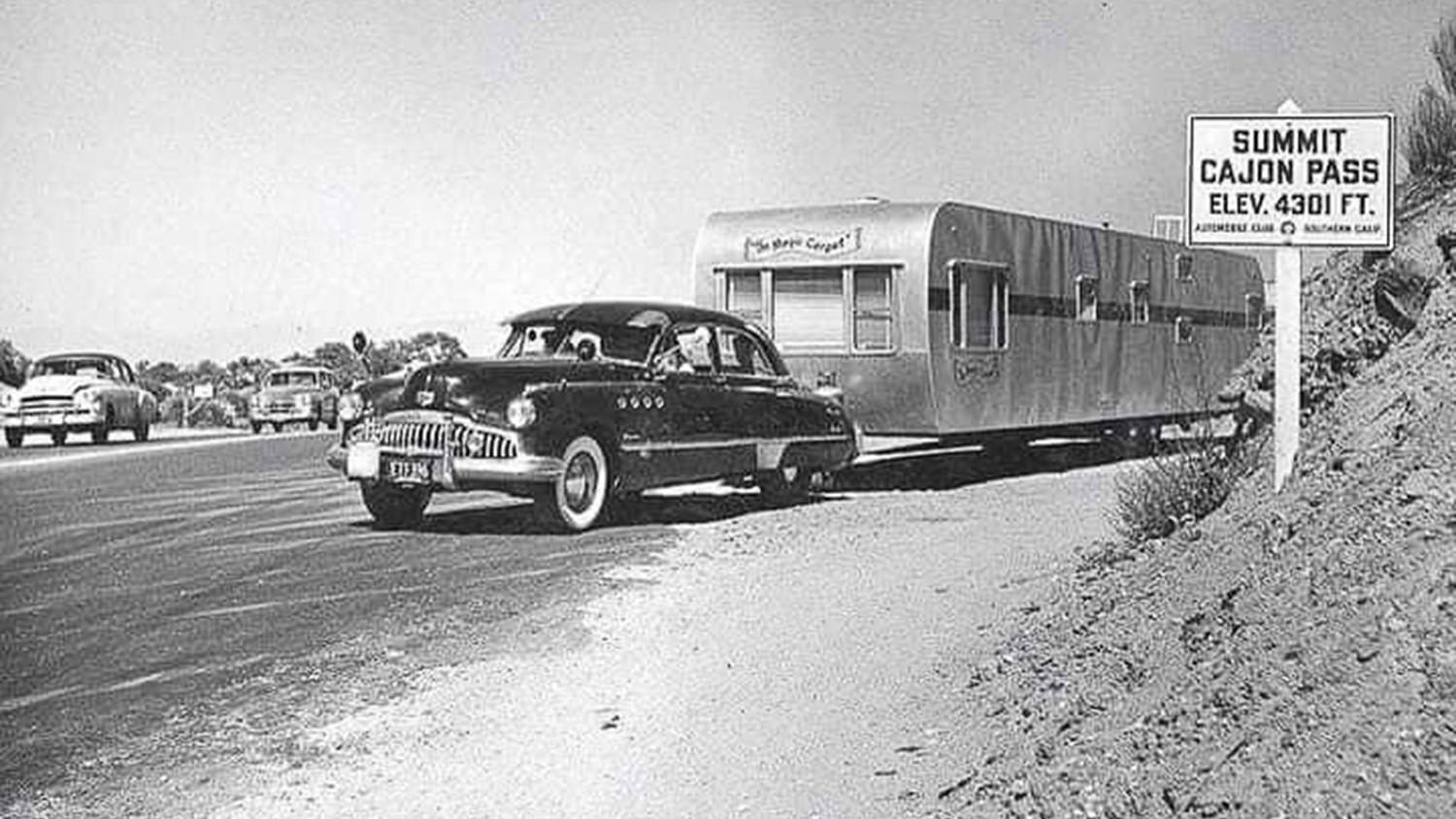
The Cajon Pass photo above was found on the internet, with no particular credit mentioned. Here’s a video all about it.
We use cookies to improve your experience on our site. By using our site, you consent to cookies.
Manage your cookie preferences below:
Essential cookies enable basic functions and are necessary for the proper function of the website.
Statistics cookies collect information anonymously. This information helps us understand how visitors use our website.
Google Analytics is a powerful tool that tracks and analyzes website traffic for informed marketing decisions.
Service URL: policies.google.com (opens in a new window)