A title frame spells out the importance of compost in restoring the Cardinal Valey Habitat.

Meredith Ludwig is making compost the star of her Cardinal Valley documentary


Bob Foos

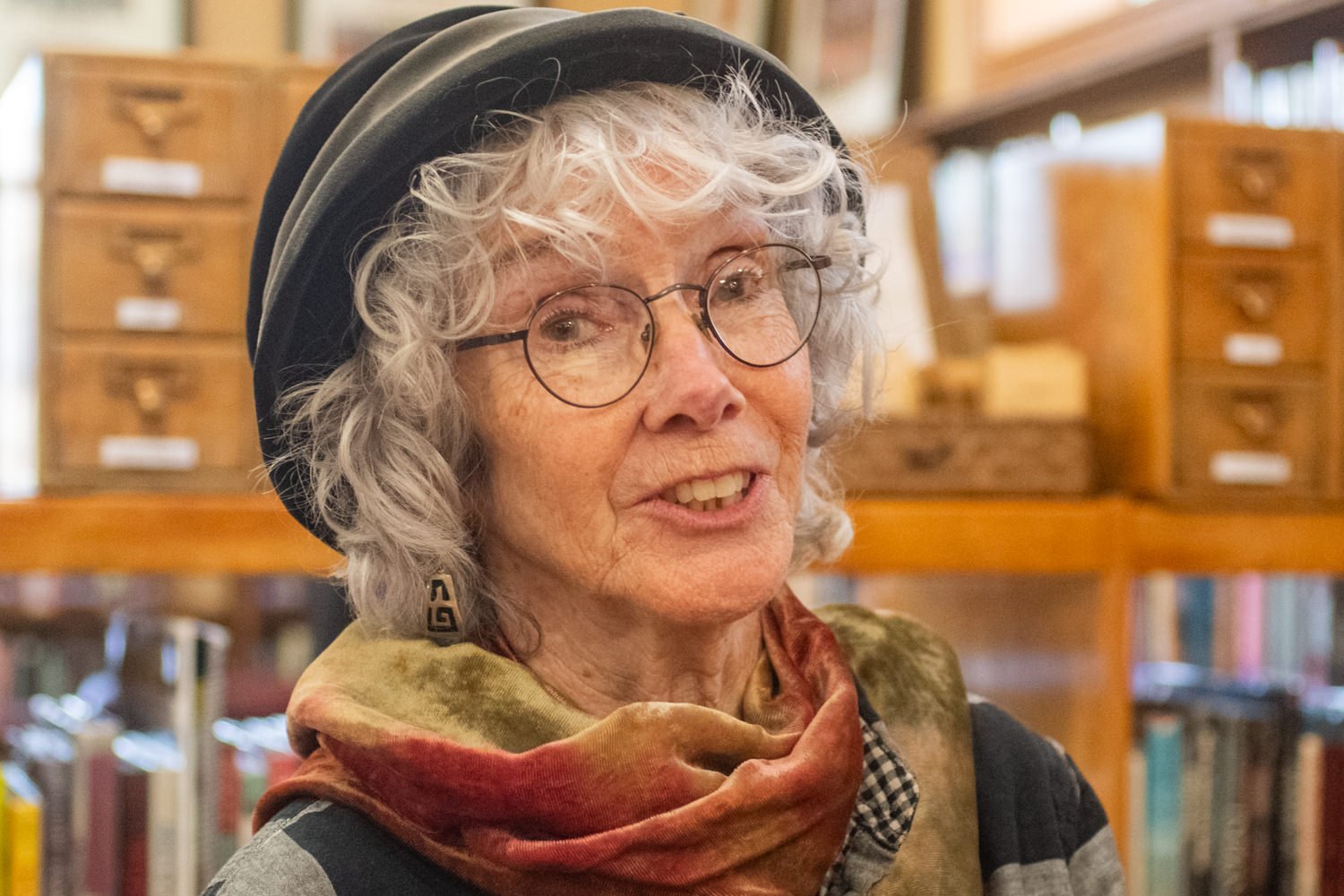
Meredith Ludwig discusses her fascination with compost during an interview Monday in the Webb City Public Library.

Meredith Ludwig “gets excited” about compost. That’s why she was drawn to Webb City, where compost is being created on a large scale to restore the Cardinal Valley Habitat to its natural state.

“We need broken-down matter to build up soil,” she says. “I don’t like seeing things go to waste.” In fact, she named her long-running podcast on KOPN Community Radio in Columbia “The Compost Pile.”

Ludwig lives in Boonville but has been familiar with our region for some time. Her involvement in radio theatre brought her to Ottawa County, Okla., where she wound up recording a series of 14 videos that were produced with a grant from the Administration for Native Americans and Eastern Shawnee Tribe of Oklahoma. “Lives We Weave” can be seen on YouTube.

While working on that project, she says, “I used to go shopping at the Webb City Farmers Market.”

So in Ottawa County and Webb City, she says she had already been introduced to the chat piles.

As that project ended and she was just getting back to central Missouri, she was with friends in Columbia when she learned the scale at which “they’re composting in Webb City.”

It came up in conversation with Scott Hamilton and Dave Mosby, with U.S. Fish and Wildlife Service. She asked them, “‘If you looked back on all your years, where would you point to that you’d say was a success?’”

They told her she should see what’s happening in Webb City.

After the EPA took down and buried the chat piles, U.S. Fish and Wildlife and the Missouri Department of Natural Resources partnered with Webb City – by providing funding and expertise – to restore the reclaimed areas to the native state they would be in if not for the damage left behind by the mining era.

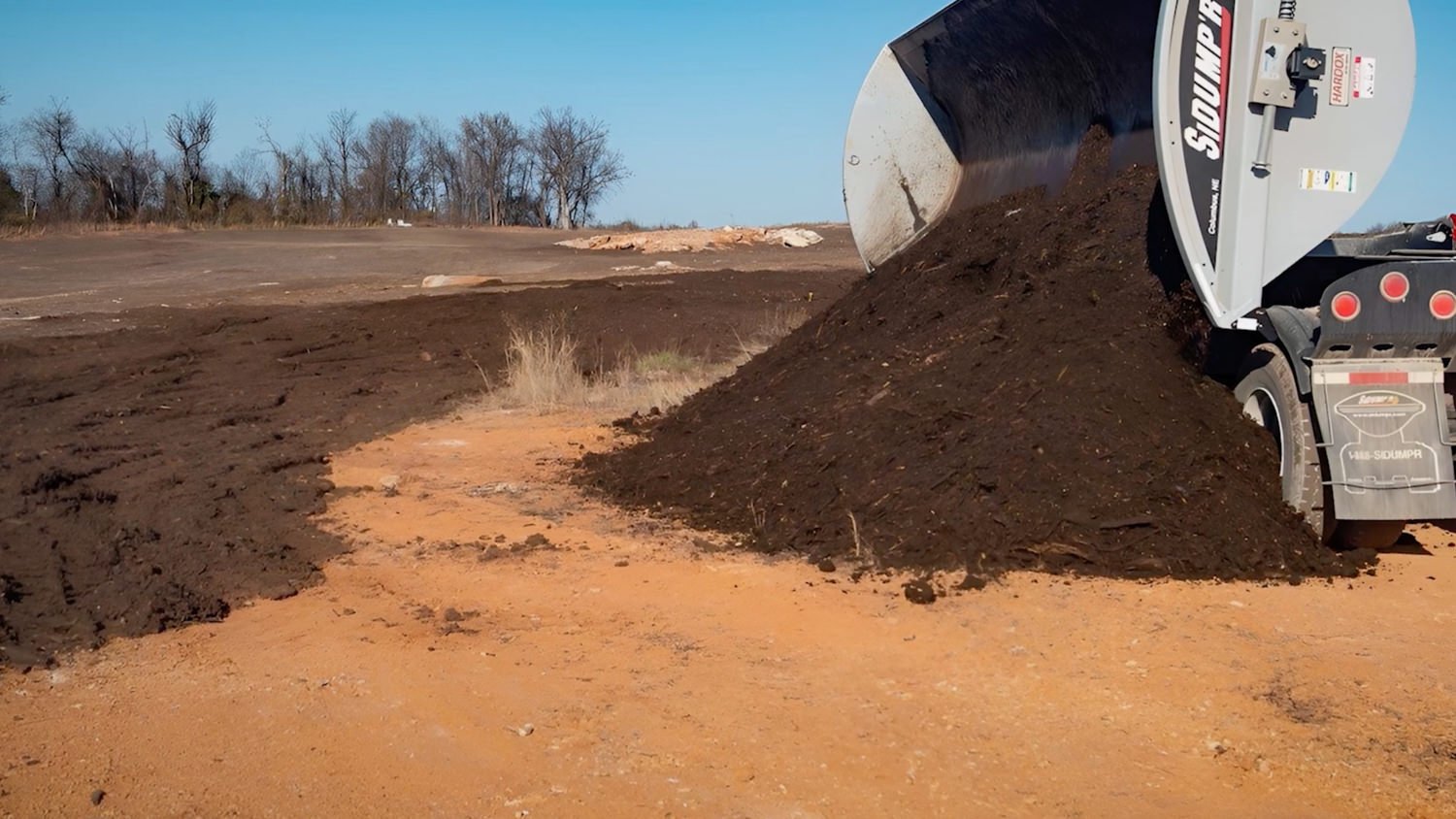
Finished compost is dumped to cover clay to provide a layer suitable for seeding grass.

‘I get excited by compost’

Much of Cardinal Valley Habitat’s was covered by the EPA with top soil, but there was still a lot of barren clay.

Meanwhile, there was a problem with sludge at the Center Creek 201 Wastwater Treatment plant, which serves and is operated by Webb City, Carterville and Oronogo. The sludge contained too much zinc for it to be applied on fields. And it cost hundreds of thousands of dollars to haul it off to be put in a landfill.

The solution benefited both Cardinal Valley Habitat and the cities.

At the treatment plant, the sludge is dried and mixed with cow manure and ground-up wood chips to create a compost that has an acceptable percentage of zinc.

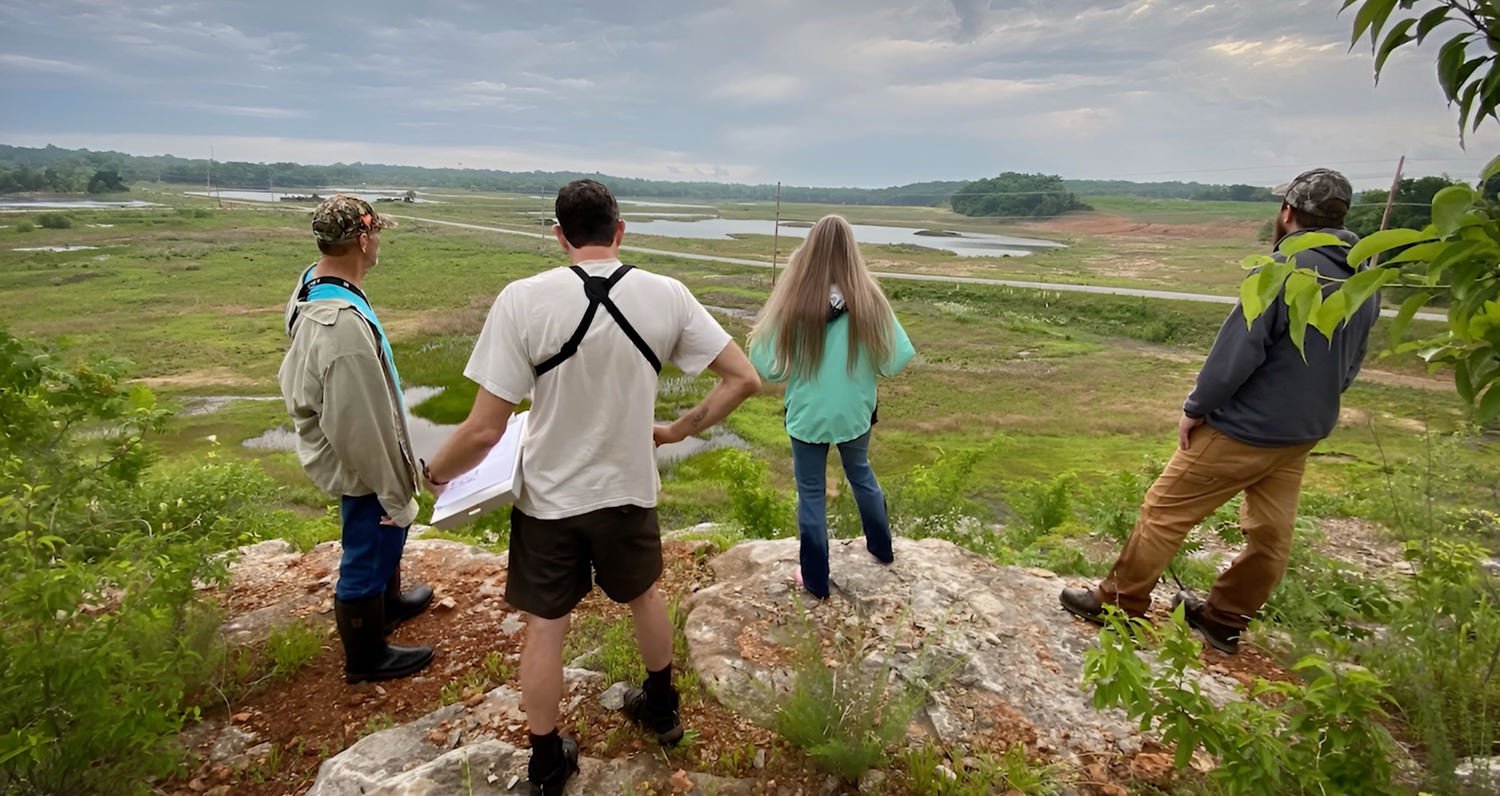
That compost has been successfully used to cover areas of clay where grass now grows. You can see it especially well on the grass-covered hills above the lakes northeast of the intersection of County Road 230 (North Madison Street) and Hawthorne Road. A once-barren hill northeast of the treatment plant in that same area is also now covered with grass.

An overlook in the Cardinal Velley Habitat. – Screenshot from the documentary teaser

Ludwig saw the Webb City compost project as the subject for her longest, most impactful video.

It’s not that the process here is new, it’s “the amount of acreage that makes it unusual,” she says.

She initially produced a three-minute trailer to promote her vision for a 30-minute documentary of “Cardinal Valley: A Restoration Story.”

She presented it during a City Council meeting in September 2024 and received a $5,000 donation from the city to support her project.

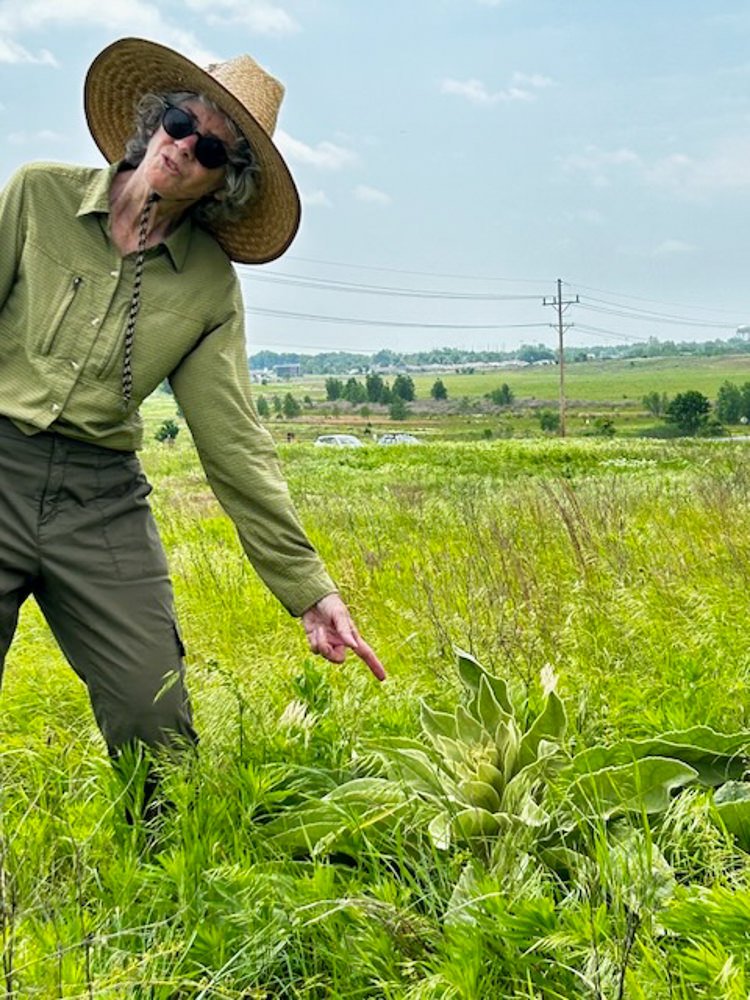
Meredith Ludwig asks what plant that is growing in the habitat. It is a common mullein (Verbascum thapsus). – Amera Wild photos
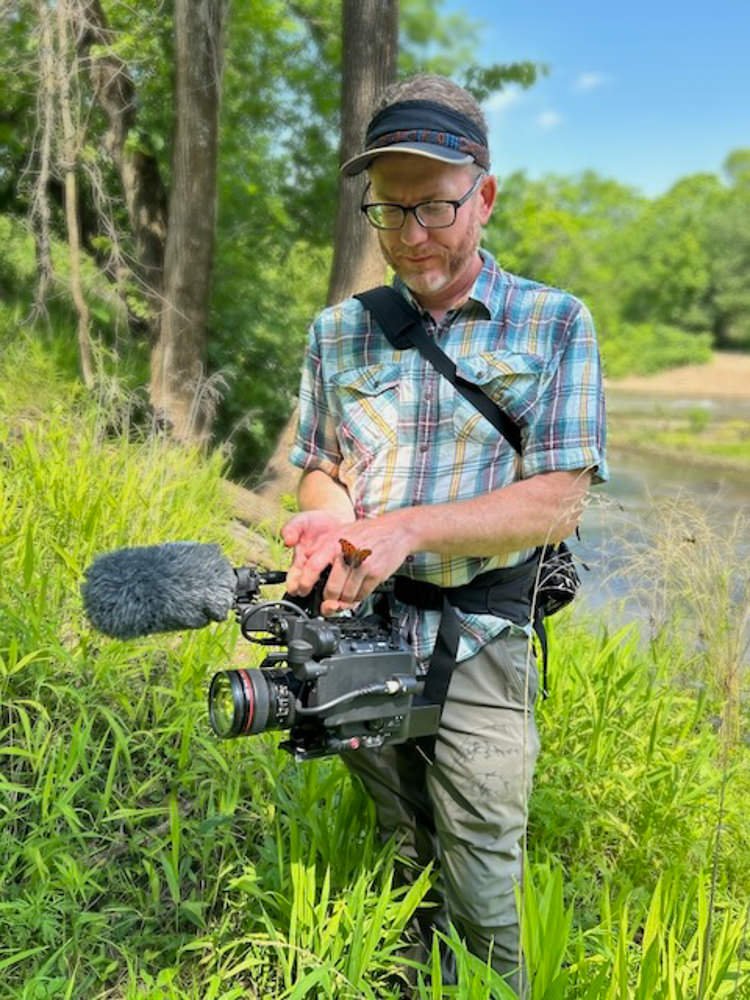
A butterfly lands on Aaron Phillips' hand while he is filming for the documentary.

Since then, Ludwig, the producer and narrator, has returned to Webb City often with Aaron Phillips, the director of photography and editor. Matt Schacht is the associate producer.

She is back in town this week to record more audio from John Nichols, the manager of Cardinal Valley Habitat. City Administrator Carl Francis has preveiously been interviewed.

She’s receiving interest from prospective financial supporters, too. And she attended a meeting of the Friends of Cardinal Valley, a local environmental group.