Bob Foos
There was a problem with a large amount of grease entering the Center Creek 201 Wastewater Treatment Plant and threatening its operation.
But the threat is over.
A manhole outside the south city limits of Carterville, on the C&L Grease property, was found on Tuesday to be sealed off – filled with concrete.
A Webb City crew was sent to the site Tuesday with a video camera to determine, as expected, if the source of the grease was an “illicit” manhole.
That action was the result of what was probably the longest-ever meeting of the Center Creek 201 Board of Directors, which took place on Thursday at City Hall in Webb City. That body includes the mayors of Webb City, Carterville and Oronogo, and other representatives of each city.
William Runkle, waste water utilities director, began the meeting with a dire description of the problem.
First of all, he said sewage plants aren’t designed to treat industrial waste that isn’t pretreated.
It was in early 2025, he said that issues with the grease were noticed. “Things were getting upset,” pushing the limits of what the plant is allowed to discharge.
On May 19 of this year, he said the analysis of a sample taken at the lift station on Sharon Drive, where all of Carterville’s sewage is sent to the plant, was “very alarming.”
The search for the source of the grease was narrowed to the south side of Carterville, and in particular to a manhole on Arch Street, where C&L Grease is located.
“I’ve never seen a number (of biochemical oxygen demand) that high,” Runkle said about the analysis of the sample taken at that manhole.
Webb City Mayor Lynn Ragsdale said, “No municipal system in the state can accept what was put in our system.” He added that Joplin had denied a request for sewage service from “this company.”
Runkle warned the board members that if the grease entering the plant wasn’t stopped, the plant would “die,” meaning the microorganisms that treat the sewage would die. The state would revoke the plant’s discharge permit, there would be possible fines, fish would be killed downstream, and there would be an excess amount of sludge.
One drastic solution he suggested would be to cut off the flow from Carterville.
Webb City City Administrator Carl Francis had requested a Sunshine records request from Carterville in the effort to track down the source of the grease. That request was determined to be too vague.
Rod Surber, a board member representing Webb City, asked, “Who cut into that sewer line?”
Carterville Mayor Alan Griffin said, “We know pretty certain where it’s (grease) coming from.”
Oronogo Mayor Charles Wilkins, who chairs the board, asked, “Do we have the authority to close that manhole?”
Ragsdale suggested the manhole could have been allowed to be put in under a “good-ol’-boy” agreement without the knowledge of Carterville’s upper management.
The long meeting ended with Wilkins authorizing Runkle’s staff to put a camera in the suspect line to determine if the source was coming from outside Carterville’s city limits.
As of Wednesday, after the suspect manhole was found to be plugged, Francis reported that the flow of the grease into the plant has ceased.
He said odor played a big part in the discovery of the grease source. That area was also believed to be the source of a widespread odor in 2025 that caused citizen complaints in Webb City and as far away as Oronogo.
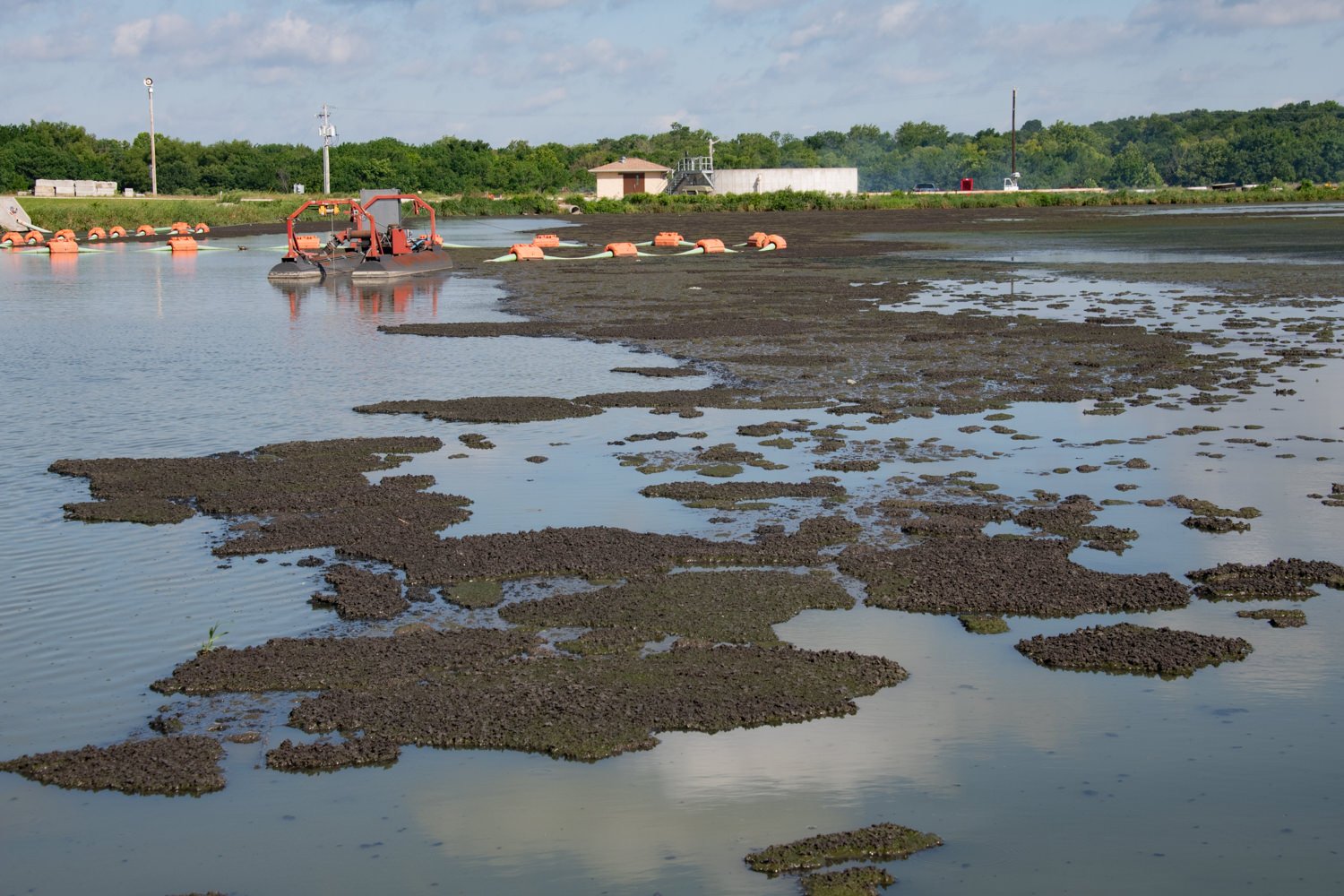
What’s left now is a cleanup at the plant, especially to remove the grease from the sludge pit.
We use cookies to improve your experience on our site. By using our site, you consent to cookies.
Manage your cookie preferences below:
Essential cookies enable basic functions and are necessary for the proper function of the website.
Statistics cookies collect information anonymously. This information helps us understand how visitors use our website.
Google Analytics is a powerful tool that tracks and analyzes website traffic for informed marketing decisions.
Service URL: policies.google.com (opens in a new window)